
Your Travel Wardrobe: Pack for the Weather, Build More Outfits
Build a weather-aware travel wardrobe with layers, outfit planning and an original Sudoku packing illustration.
A useful travel wardrobe begins with the journey, not the suitcase. Before deciding which sweater, dress or shoes to take, look at where you will be, what you plan to do and how the conditions may change throughout the day. Packing more does not automatically mean being more prepared. Packing pieces that work together can give you more choices with less luggage.
A capsule wardrobe is a small collection of compatible clothes. The Sudoku packing idea turns that collection into a visual planning exercise. Used thoughtfully, it can help you see complete outfits before leaving home. The goal is a practical wardrobe, not winning a competition to fit everything into nine items.
Start with each destination's weather
Research the exact cities and travel dates. Look at daytime highs, nighttime lows and likely precipitation. Add wind, altitude and the time you expect to spend outdoors. A seaside walk, a mountain excursion and an afternoon inside museums call for different preparation, even when they appear in the same itinerary.
Our November–December temperature map helps you explore broad climate patterns before choosing a destination. It combines historical average daytime maximum temperatures for those two months. It does not show the temperature at every hour, a forecast for your travel week or the full difference between November and December.
Use the map for inspiration, then examine your chosen cities separately. Shortly before departure, check their forecasts and adjust your layers. Avoid packing solely for a monthly average that hides cold evenings or an unusually warm day.
Match the wardrobe to your activities
Write a short list: walking days, travel days, dinners, outdoor excursions, swimming, visits with clothing requirements and any special celebration. Consider laundry access and the longest stretch between opportunities to wash clothes.
Then assign a functional outfit to each activity. If a piece only works for one imagined occasion, decide whether that occasion is really part of your plan. A special dress may earn its place for a holiday dinner; three similar special dresses may not. Shoes deserve the same test, especially when walking is a large part of the trip.
What is the Sudoku packing method?
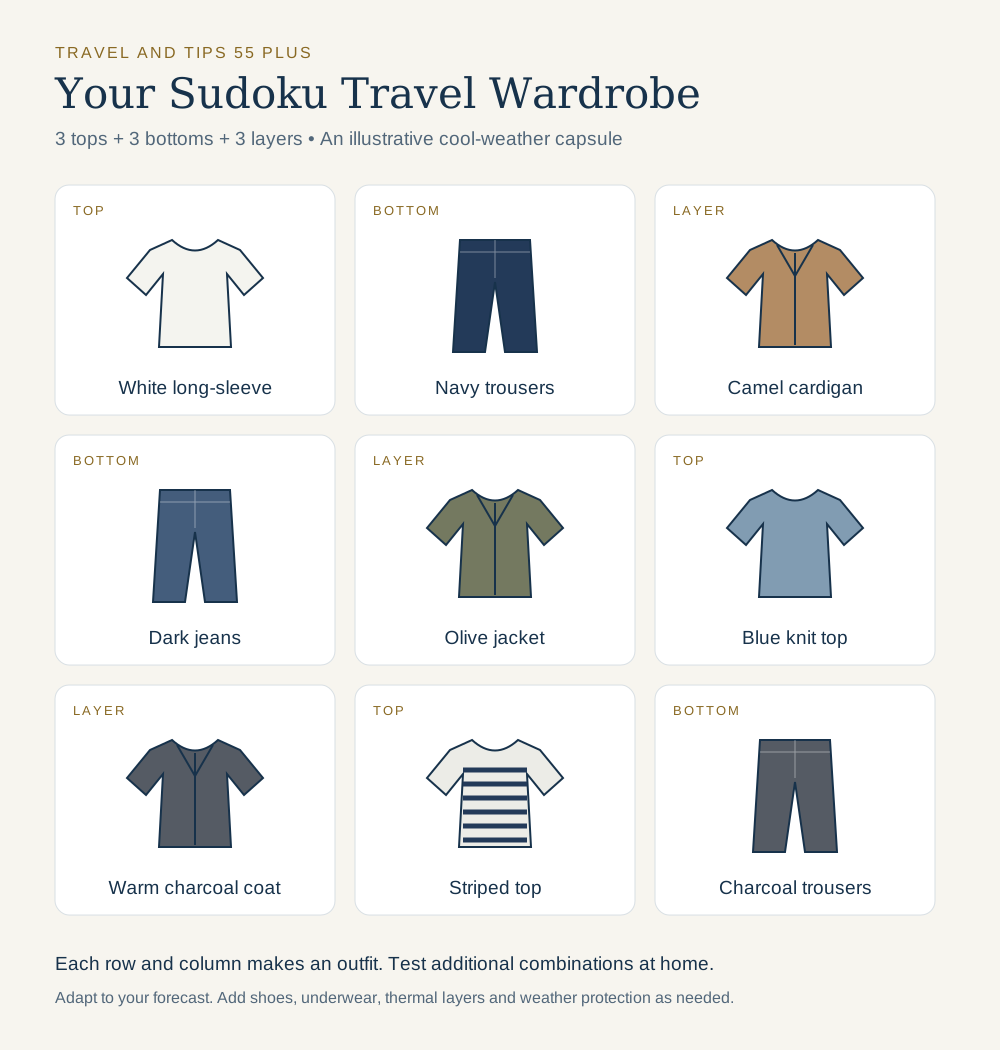
A common version uses three tops, three bottoms and three layering pieces: nine core garments arranged in a three-by-three grid. Each row and column contains one garment from each category. The arrangement helps you see outfits instead of a pile of unrelated clothes.
This is a wardrobe planning method inspired by a grid, rather than the rules of the number puzzle. The exact format has several variations. Our example focuses on tops, bottoms and layers for cool-weather travel, with shoes and accessories selected separately.
Build the grid from the clothes you will wear
Start with three bottoms suited to the trip: for example, comfortable dark trousers, jeans and a second pair of practical trousers. Choose three tops that work with those bottoms. Add three layers with different purposes, such as a cardigan, a light jacket and a suitable coat.
Arrange the categories like this: top / bottom / layer in the first row; bottom / layer / top in the second; layer / top / bottom in the third. The diagram illustrates this arrangement. Read each row and column as an outfit, then check other combinations that make sense.
Not every diagonal contains a complete outfit, so do not assume every straight line is valid. The larger benefit comes from interchangeability. Three choices in each of three categories create up to 27 theoretical combinations, but only count the combinations that fit well, suit the weather and feel good together.
Choose a cohesive color palette
Pick a few colors you enjoy wearing and can easily combine. Neutrals can form a useful base, with one or two accent colors. A favorite scarf, necklace or bag may create variation without requiring another full outfit.
Color compatibility alone is not enough. Check lengths, proportions and fabric weight. A jacket must fit over the tops you intend to wear underneath. A loose blouse may not feel right with every pair of trousers. Try complete combinations at home and photograph the ones you would actually wear.
Adapt the method for 40–60°F weather
Forty to sixty degrees Fahrenheit is approximately 4–16°C. This range can include cool sightseeing days and colder mornings. Think in removable layers: a comfortable top, an insulating layer when needed and an outer layer suited to the forecast.
Rain or wind can change what feels comfortable. Choose the appropriate outer protection rather than assuming a sweater alone will do. If you will spend much of the day indoors, clothes that adapt easily can be more convenient than one very heavy outfit. The grid is a starting collection; adjust it to your own tolerance and activities.
Adapt the method for 20–40°F weather
Twenty to forty degrees Fahrenheit is approximately −7–4°C. In these conditions, staying comfortable may require thermal base layers, a genuinely warm outer layer, gloves, a hat and appropriate footwear. These functional pieces belong in the packing plan even if they sit outside the nine-piece grid.
Do not substitute a fashionable but inadequate coat just to preserve the formula. Consider precipitation and whether sidewalks may be wet, snowy or slippery. Check the conditions for the places you will visit, and select clothing and footwear accordingly. Looking coordinated is useful; being adequately prepared comes first.
What to pack for 20–40°F · approximately −7–4°C
Watch on YouTube ↗
Choose shoes for the day you will have
Bring footwear that you have already worn comfortably. Match it to walking surfaces, weather and planned activities. Test shoes with the socks and trousers you intend to wear, and consider how they behave after several hours rather than a few minutes at home.
There is no universal number of pairs. One reliable walking pair and another versatile option may cover a simple trip; winter weather, hiking or a special event may justify something else. Every pair should have a clear purpose. Wear bulky travel-appropriate items on the journey when convenient.
Plan laundry and mixed climates
Repeating outfits is a useful strategy, but the number of clean items must match your laundry plan. Check whether laundry is available, what it costs and whether fabrics will dry in time. Underwear, socks, sleepwear, toiletries and activity-specific pieces still need their own checklist.
For a journey through several climates, build a common core and add functional pieces for the extremes. Group clothes so the next destination's items are easy to reach. A heavy coat should not force you to reorganize the whole suitcase at every stop.
Give each piece a reason to travel
Before packing, ask: does this fit the weather, does it work with several other pieces, and will I actually wear it? Save outfit photos on your phone. They make getting dressed simpler and help reveal duplicates before departure.
The principle stays the same: choose the destination, understand the conditions and activities, then build a wardrobe that works for your journey. Tell Andrea what you are planning if you need help connecting the trip's pace and practical details.
Sources and planning notes
Seasonal dates and product information checked October 12, 2026. Confirm specific hours, availability and booking terms before paying.
Let’s make it your trip.
Tell Andrea your dates, interests and preferred pace.